Santa Fe Springs, CA · Garage Door Service
Garage Door Maintenance Across the Santa Fe Springs Service Area
Garage door maintenance in Santa Fe Springs, CA for homes built 1943-2012. Tune-ups, lubrication, and safety checks for aging torsion springs and tracks.
- Repairs & new doors
- Springs & openers
- Serving 4 nearby communities
Booking a Visit
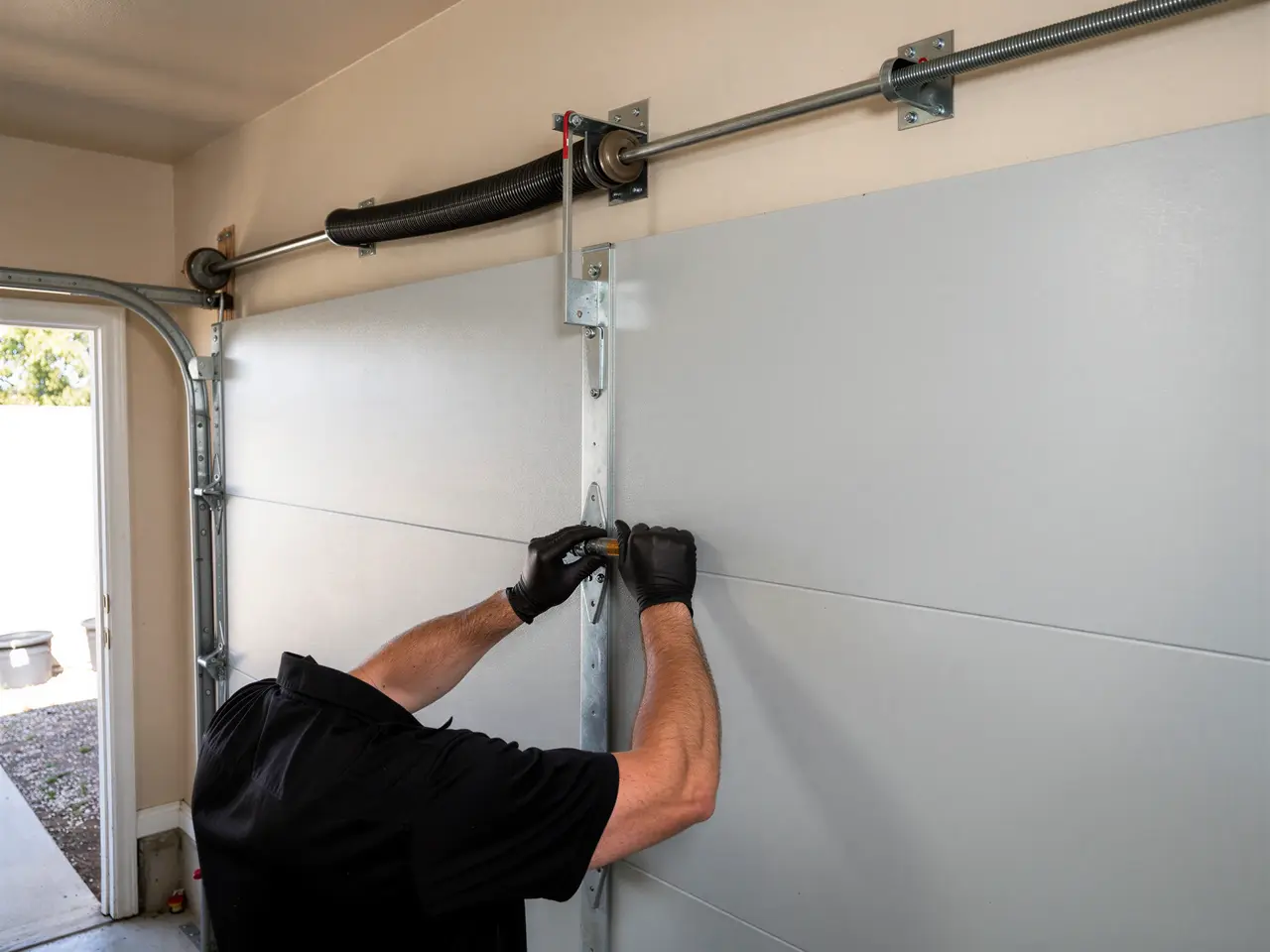
A maintenance visit is scheduled work, not a breakdown call. We go through the door and the opener, check spring tension, lube the rollers and hinges, tighten hardware, and test the balance and auto-reverse. If something turns up that needs more than a tune-up, we tell you before we start cutting into a bigger job.
One limitation worth saying up front: a maintenance visit doesn't include parts. If your torsion spring is near the end of its cycle count or a track is bent, we'll quote that separately rather than fold it into the visit, because spring and track stock varies by size and we don't carry every size on the truck every day.
We book these visits across the wider service area - Santa Fe Springs and the communities around it - not just one town, so the same crew that tunes up a door here is the one your neighbor a few miles out might see next. That consistency is why we'd rather catch a worn cable on a scheduled visit than get the call after it snaps.
What You Are Seeing
The signs that bring people to search for maintenance are usually small before they're expensive: a door that groans going up, a remote that needs three tries, a panel that shudders instead of gliding, or a spring that looks stretched and dull instead of tight and clean. None of those are emergencies yet. All of them get worse on a schedule you don't control.
Most of what we find on a maintenance call is wear, not failure - rollers that have gone from round to flat-sided, hinges that have worn their pivot holes oval, a track that's collected enough dust and old grease to bind the rollers instead of guiding them. Across the housing stock in this area, built mostly between 1943 and 2012 with a lot sitting around 1963, these are original or first-replacement parts doing a job they were never built to do indefinitely.
We're not selling you a new door on a maintenance visit. If what you're seeing is just wear, the fix is cleaning, lubrication, and adjustment - not a sales pitch for a replacement you don't need yet.
Why This Fails Locally
This area's housing runs 1943 to 2012 with a median build year around 1963, and the stock across the 32 communities we cover leans heavily 1960s and 70s. That matters for maintenance because a door and opener sized and speced in 1965 wasn't built with today's heavier insulated steel panels or current opener force settings in mind. When an owner upgrades the door but not the spring, or adds an opener to original hardware, the whole system is carrying more than it was designed for, and it shows up first as noise and binding before it shows up as a broken spring.
The mild temperate climate here is actually part of the problem, not separate from it. There's no hard freeze to crack a seal or force an emergency call, so lubricant just slowly dries out and gets ignored for years at a stretch. Nothing forces the issue, so doors run dry far longer than they would somewhere with harsher seasons, and by the time a part fails it's often failed from years of quiet neglect rather than a single bad week of weather.
The DIY Question
Some of this is fine to do yourself. Wiping down the tracks, visually checking that the rollers aren't cracked, and testing the auto-reverse by placing a board under the door are all reasonable for an owner to handle without a truck showing up. Lubricating hinges and rollers with the right garage door lubricant, not household oil, is also something most people can manage safely.
What isn't a DIY job is the torsion spring. It's under enough tension to cause real injury if it's loosened or removed wrong, and that's true whether the door is original 1960s stock or a recent replacement. Cable tension and track alignment fall in the same category - they look simple and they aren't forgiving of a mistake.
Our honest answer: if your door is sluggish, noisy, or off-balance, a maintenance visit catches it cheaper than letting it run until a spring or cable lets go. If you're already comfortable with a wrench and a ladder, do the lubrication and the visual checks yourself and call for the parts under tension.
Frequently asked questions
How often should a garage door actually get serviced?
There's no single number that fits every door, but a yearly check catches most of what matters: spring tension, roller wear, track alignment, and opener force settings. Doors used multiple times a day or sitting with original 1960s-era hardware tend to need attention sooner than that.
Do you service garage doors outside Santa Fe Springs itself?
Yes. We cover the wider service area, including communities like West Whittier-Los Nietos, East Whittier, Artesia, and others nearby. If you're not sure whether your address falls inside the area we run, ask when you call and we'll tell you straight.
Will maintenance stop my spring from breaking?
It won't make a spring immortal, but it gives you a real read on where it stands - stretched, rusted, cycle count getting high - so you can replace it on your schedule instead of finding out when it snaps and the door won't move at all.
Is maintenance worth it on an older door?
Usually yes, as long as the door and frame are structurally sound. A tune-up on an older door is cheap compared to letting worn rollers or a dry track grind the opener motor down. If the door itself is failing structurally, we'll tell you that instead of servicing it anyway.
Related services
By Neighborhood
Maintenance across the Santa Fe Springs area
We also handle maintenance in these Santa Fe Springs-area suburbs.
Book garage door service in Santa Fe Springs
Call now or request a quote - tell us what the door is doing and where you are.