Santa Fe Springs, CA · Garage Door Service
Santa Fe Springs Homeowners: What to Know Before Replacing a Garage Door
A look at when to wait and when to replace a garage door in Santa Fe Springs, built on this area's 1960s-70s housing stock and mild year-round climate.
- Repairs & new doors
- Springs & openers
- Serving 4 nearby communities
Doing Nothing For Now
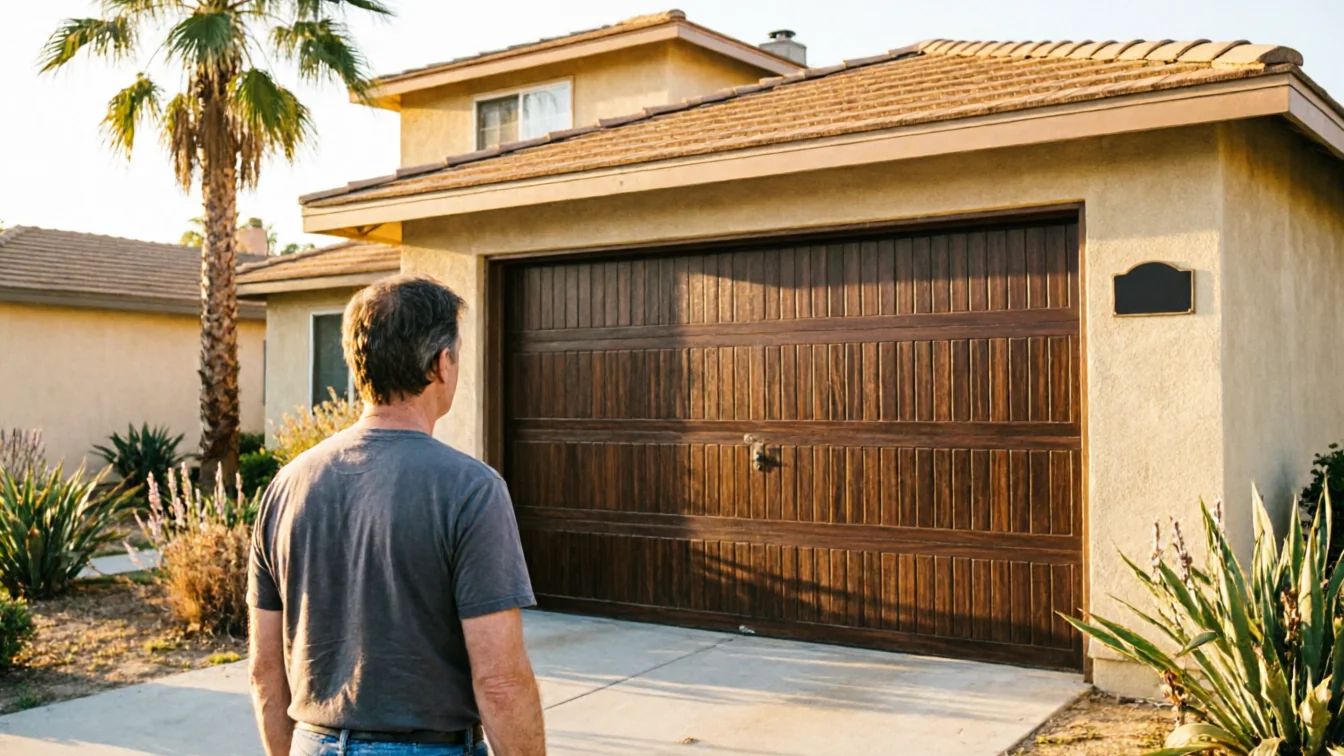
If your door still opens and closes without a fight, you don't need to replace it just because it's old. Housing across Santa Fe Springs was built between 1943 and 2012, with a median year of 1963, which means a lot of garages here still carry their original door from that first wave of construction in the 1960s and 70s. A door from that era can keep working for decades if the spring is sized right and the track hasn't been bent. The mild temperate climate here helps too - there's no freeze-thaw cycle working the panels apart, no heavy snow load testing the springs, and no salt air eating the hardware the way it would near open coastline. If the door is slow but functional, cosmetic rust is only surface-level, and the opener still responds, you're fine waiting. Replacing a working door early just because it looks dated is money spent on appearance, not function. Save the budget for when something actually fails.
What to Check
Start with the springs - on a house from the 1960s or 70s stock common across this area, a torsion spring that's never been swapped is well past any reasonable service life, even if it hasn't broken yet. Look for gaps in the coil or rust pitting along the spring body. Next, check the tracks for bends or separation from the wall, especially on doors that predate modern galvanized mounting hardware. Check the panels for delamination or rust-through near the bottom, since that's where ground moisture and daily wear concentrate. Test the auto-reverse safety feature by placing a block under the door - if it doesn't stop and reverse, that's not a maintenance item, that's a replace-now item regardless of how old the door is. Last, check whether the door is a standard width. Some original doors from this era were sized to openings that no longer match stock panel widths, which matters if you're pricing a straight swap versus a full frame rebuild.
The Problem
The real issue with 1960s and 70s doors isn't that they're worn out - it's that the parts underneath them have changed. Hardware sizing, spring winding cones, and track profiles from that period don't always match what's stocked today, so a repair can turn into a search for a part nobody keeps on the shelf. Insulation is the other gap: doors from that construction wave were built for a mild climate with no real insulation requirement, which was a reasonable call given the weather here, but it means the door offers little thermal value if you've since finished the garage or added living space above it. Replacing the door at that point isn't about function, it's about catching the house up to how it's actually being used now. One limitation worth saying plainly: if the opening itself is out of square or the original framing has settled, a straight panel swap won't fix that, and no door, old or new, will seat right until the frame is addressed first.
How Local Conditions Play In
Santa Fe Springs sits in a mild temperate band, so the usual replacement triggers you'd worry about elsewhere - ice damming, wind-load failures, humidity swapping a wood door's dimensions - mostly don't apply here. Doors fail here from age and use, not from weather extremes. That said, steady sun exposure over 50-plus years still fades finish and dries out old weatherstripping and seals, even without freeze cycles to compound it. With a median household income of $99,568 and 58,525 owner-occupied houses across the service area, replacement is often a planned upgrade rather than an emergency repair - owners have the room to wait for the right door rather than grabbing whatever's in stock. That's worth factoring into timing: in this climate, there's rarely a reason to rush a decision out of weather pressure, so it pays to compare options rather than replace reactively the day a spring lets go.
Frequently asked questions
How old does a garage door have to be before replacement makes more sense than repair?
There's no fixed age cutoff. A lot of houses here still run original doors from the 1960s-70s building wave, and some still work fine. The deciding factor is usually parts availability and whether the track and frame are still square - once those go, repair costs start approaching replacement cost anyway.
Does the mild climate here mean my door will last longer?
Generally, yes. Without freeze-thaw cycling, heavy snow load, or salt air, the mechanical parts - springs, tracks, rollers - wear more from use and sun exposure than from weather damage. Doors here tend to fail from age and cycle count rather than from a specific storm or season.
My house is from the 1960s - will a new door just bolt into the old opening?
Not always. Door widths and track hardware from that era don't always match current stock sizing. If your opening is non-standard or has settled over the decades, the installer may need to rebuild part of the frame rather than do a straight panel swap.
Is it worth insulating a door on a house that was never built with insulation in mind?
It depends on how the garage is used. If it's just parking, the mild climate here means the payoff is small. If the space is finished or has living area above it, an insulated door makes a real difference regardless of what the original builder specified back in the 1960s or 70s.
Related garage door services in Santa Fe Springs
More garage door guides
Book garage door service in Santa Fe Springs
Call now or request a quote - tell us what the door is doing and where you are.