
Santa Fe Springs, CA · Garage Door Service
What That Garage Door Noise Is Actually Telling You
A guide for Santa Fe Springs homeowners on diagnosing garage door noise, tied to the city's 1960s-70s housing stock and mild coastal-valley climate.
- Repairs & new doors
- Springs & openers
- Serving 4 nearby communities
Doing Nothing For Now
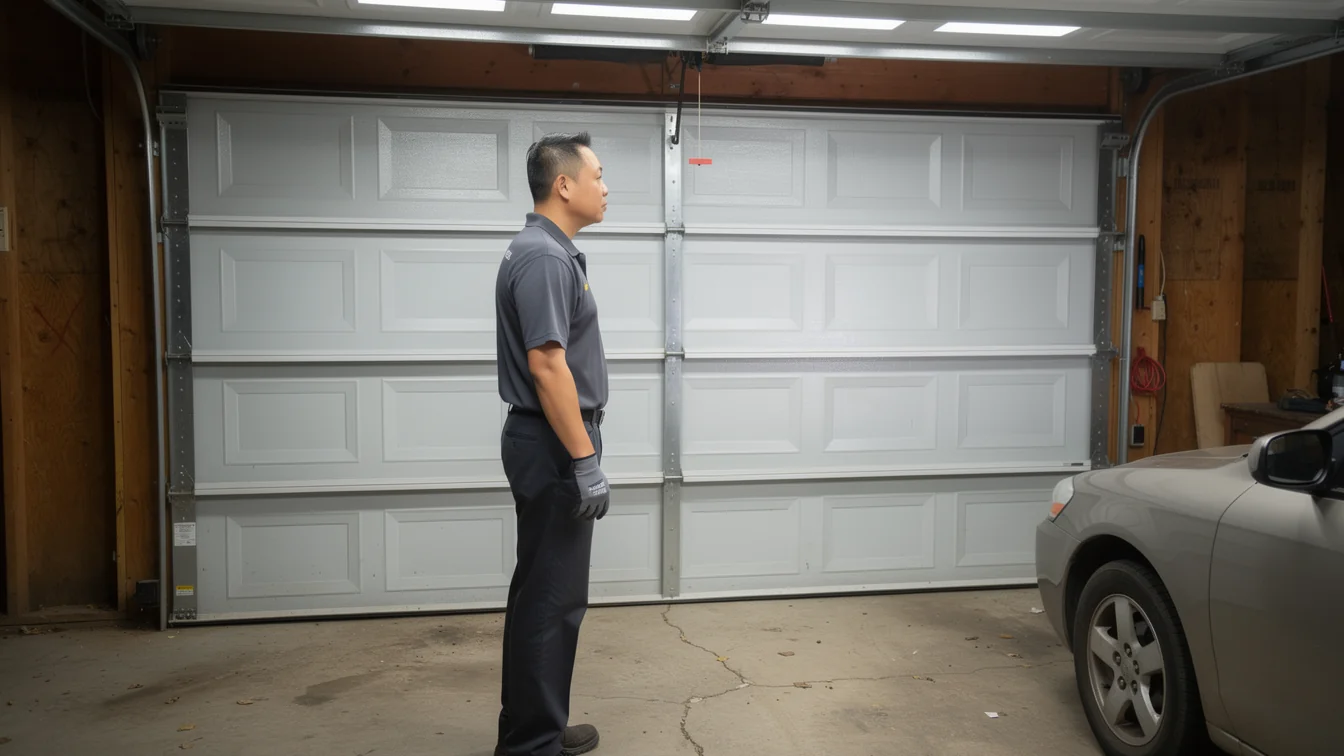
If your door is making a new sound but still opens, closes, and stops where it should, you have some room to wait and watch - but not forever. A lot of the housing stock here went up between the 1960s and 70s, with the broader range running 1943 to 2012 and a median build year of 1963. That means a big share of doors in town are running on hardware that's been through decades of cycles: rollers, hinges, and track brackets that were fine for years and are now just worn. A new rattle or squeal on a door this age is rarely random. It's usually a part telling you it's near the end of its service life. Waiting a week to watch for a pattern is reasonable. Waiting through a whole summer of cycles on a noise that's getting louder is how a $20 roller job turns into a cable or spring failure that drops a 150-pound door section. The honest limit here: once a noise changes character week to week instead of staying steady, that's not a 'keep watching' noise anymore - that's a call-us noise.
What to Check
Start with where the sound happens in the cycle. A grinding or popping sound right as the door starts to move usually points to the spring system, not the opener. A rhythmic metal-on-metal clack as the door travels is almost always rollers - steel rollers on older track, which is common on houses from the 1960s-70s stock this area has a lot of, wear louder than nylon ones. A low hum or rattle at the top of the travel is often the opener's drive gear or chain slack rather than the door itself. Check the track brackets by hand - on houses with original 1960s-70s hardware, these brackets loosen from decades of vibration and are an easy, cheap fix if caught early. Look at the springs themselves: visible gaps between coils, or a spring that looks stretched on one side more than the other, means it's wearing unevenly. None of this requires tools beyond a flashlight and a step stool. What it does require is actually standing next to the door while it runs a full cycle, instead of just listening from inside the house.
The Problem
The real issue in a city with this housing stock is that original hardware and later retrofits mix on the same door. A door installed when the house was built in the 1960s or 70s may have had its opener replaced once, maybe twice, while the track, rollers, and spring anchor points stayed original. That mismatch is where a lot of noise comes from - a newer opener pulling against decades-old track that's flexed slightly out of true, or rollers replaced once but riding in a track groove that's worn to fit the old roller size. It's not usually one broken part making the noise; it's two generations of hardware rubbing against each other's tolerances. This is the piece that's easy to miss if you just replace the loudest-sounding part and call it fixed. We'll say plainly: we don't always know which generation of hardware is on a door until we've got it open and can see the bracket stamps and track gauge, so a phone diagnosis on an older door is a guess, not a quote.
How Local Conditions Play In
Santa Fe Springs sits in a mild temperate band - no hard freezes, no extreme heat swings that crack wood doors or warp steel panels the way you'd see in a harsher climate. That's actually part of why so much original 1960s-70s hardware is still in service here at all: the metal hasn't been stressed by repeated freeze-thaw or wide seasonal expansion. What it hasn't been spared is the slow wear noise comes from - thousands of open-close cycles at a steady pace across households in the 32 named areas around here. In a milder climate, noise is a much more reliable symptom than it is somewhere with big temperature swings, because you're not chasing seasonal expansion as a false cause. If a door here is noisy, it's almost always wear or a mismatch in the hardware, not the weather compensating for itself. That makes diagnosis simpler, not harder - the sound usually means exactly what it sounds like it means.
Frequently asked questions
My garage door squeals only in the morning, is that a weather thing?
Given the mild temperate climate here, it's less likely to be a weather swing and more likely dried-out rollers or hinges that haven't had lubricant worked into them overnight. On older 1960s-70s hardware, a cold-start squeal that fades after a few cycles usually points to rollers needing grease or replacement, not temperature.
Is a loud bang when the door closes always the spring?
Not always, but it's the first thing to check. A bang at the bottom of travel can be the door hitting the floor too hard because a spring has lost tension, or it can be a loose track bracket letting the door drop the last few inches unevenly. Both are common on original hardware from the 1960s-70s housing stock in this area.
How long can I wait before a noise becomes a real problem?
If the sound is steady and not changing, you can usually wait and monitor. Once it gets louder week over week, or changes from a squeal to a grind or clunk, that's a sign a part is failing rather than just worn, and waiting risks a cable or spring breaking under load.
Can you tell what's wrong over the phone?
Not reliably on an older door. Houses here span 1943 to 2012 with a median build year of 1963, and original hardware often mixes with later opener or roller replacements. We need to see the bracket stamps and track gauge in person before we can say what's actually making the noise.
Related garage door services in Santa Fe Springs
More garage door guides
Book garage door service in Santa Fe Springs
Call now or request a quote - tell us what the door is doing and where you are.