Santa Fe Springs, CA · Garage Door Service
Garage Door Service Built Around Santa Fe Springs Housing Stock
Garage door service for Santa Fe Springs homes built mostly in the 1960s and 70s. We work on the original hardware this housing stock still carries.
- Repairs & new doors
- Springs & openers
- Serving 4 nearby communities
Booking a Visit
Call or request a visit and tell us what the door is doing - grinding, hanging on one side, not closing all the way, opener running but the door not moving. That tells us whether we're looking at a spring, a track, a roller set, or the opener itself before the truck even leaves.
We work Santa Fe Springs and the surrounding area, including West Whittier-Los Nietos, East Whittier, Artesia, and La Palma, plus the smaller pockets further out like La Habra Heights and Hawaiian Gardens. If you're near Los Nietos, just two miles up, you're squarely in the same stretch of housing stock we see every week, so the diagnosis over the phone is usually close to what we find in person.
We don't give a price over the phone for anything beyond a basic service call, because spring sizing and track condition vary too much house to house to guess. What we can tell you up front is whether your symptom sounds like a same-visit fix or something that needs a part ordered first.
What You Are Seeing
Most of what gets called in as "the opener is broken" is actually the door itself. A torsion spring loses tension slowly over years, so the door gets heavier to lift by hand and the opener starts straining, chattering, or reversing partway up. Nylon rollers on original hardware wear oval instead of round, which shows up as a rhythmic thump as the door travels.
Track misalignment is the other common one - not dramatic, just a quarter inch off at the bend, enough that a roller catches and the door shudders at the same spot every time. On a lot of the housing stock here, that track was installed once in the 1960s or 70s and never touched since, so by now the slab has settled slightly and the track hardware has shifted with it.
We also see panel seams separating slightly at the hinges on older steel doors - not a safety issue yet, but a sign the door is working harder than it should because something upstream, usually the spring, isn't carrying its share of the weight anymore.
Why This Fails Locally
Housing in this part of the service area runs from 1943 up through 2012, with a lot of it clustering around 1963 - original torsion and extension spring hardware from that era is still common on doors that have never been upgraded. That's not a guess about your specific house; it's the pattern across the 32 named areas this stock spans, mostly built out through the 1960s and 70s in one long wave.
The mild temperate climate here doesn't put doors through the freeze-thaw cycling that cracks panels or seizes springs in colder regions, so a lot of original hardware has simply outlasted its intended service life without an obvious weather event forcing a replacement. The failure mode here is slow fatigue, not sudden damage - a spring wound in 1968 doesn't know it's been fifty-some years, it just keeps losing a little tension every cycle until one day it doesn't have enough left.
That combination - older original hardware plus a climate that never forces an early replacement - means we see springs and rollers running well past what you'd expect to find intact in a harsher climate. It's a maintenance problem hiding as a weather-proof one.
The DIY Question
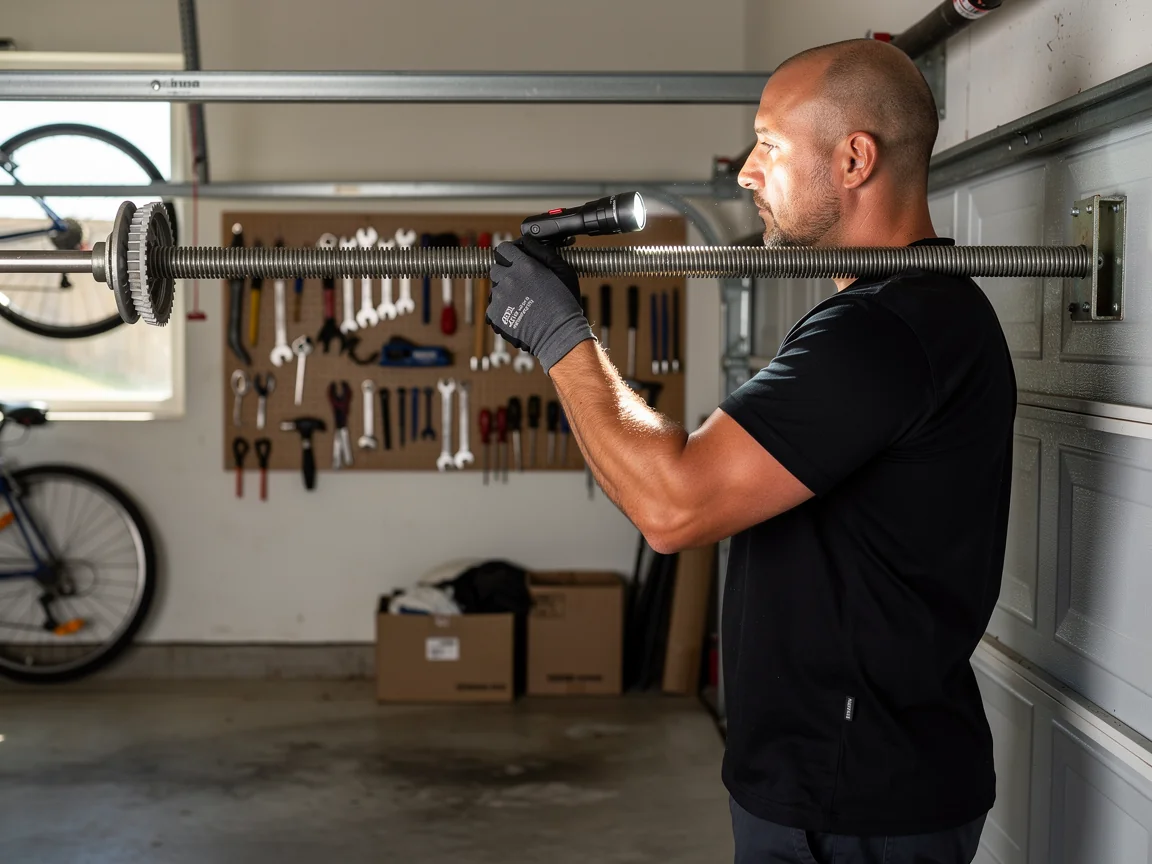
A torsion spring is wound under enough tension to break a bone or worse if it lets go while you're working on it. That part of the job isn't a reasonable DIY project regardless of how simple the YouTube video makes it look, and we won't talk anyone through doing it themselves over the phone.
What you can reasonably check yourself: whether the tracks are visibly bent, whether the rollers look cracked or oval, whether the bottom weatherstrip is torn, and whether the door is noticeably heavier to lift by hand than it used to be with the opener disconnected. Those observations help us bring the right part on the first visit instead of a second trip.
Our honest limitation: if a door's track is bent in multiple places or the panels are rusted through at the bottom, replacement usually makes more financial sense than patching it section by section, and we'll tell you that instead of running up a repair bill on a door that's past the point of being worth saving.
Frequently asked questions
Why does my garage door feel heavier to lift than it used to?
That's almost always a torsion or extension spring losing tension over time, not a sudden failure. On original hardware from the 1960s and 70s, which is common across this service area, that gradual loss can go unnoticed for years until the opener starts struggling to compensate.
Do you service areas outside Santa Fe Springs itself?
Yes, we cover the surrounding area including West Whittier-Los Nietos, East Whittier, Artesia, and La Palma, along with the smaller communities further out. If you're unsure whether your address is in range, just call and ask before booking.
Can I replace a torsion spring myself to save money?
We don't recommend it. A wound torsion spring holds enough stored tension to cause serious injury if it releases unexpectedly, and the tools to do it safely aren't something most homeowners keep on hand. This is one job worth paying for.
Does the mild climate here mean garage doors last longer?
In some ways yes - there's no hard freeze-thaw cycling to crack panels or seize hardware early. But it also means original 1960s and 70s springs and rollers often run well past their expected life without an obvious weather event forcing replacement, so failures tend to be gradual fatigue rather than sudden damage.
By Neighborhood
Garage Door Service across the Santa Fe Springs area
We also handle garage door service in these Santa Fe Springs-area suburbs.
Book garage door service in Santa Fe Springs
Call now or request a quote - tell us what the door is doing and where you are.